Multicultural Weddings: How to Incorporate a Garland Exchange Into Your Wedding Ceremony
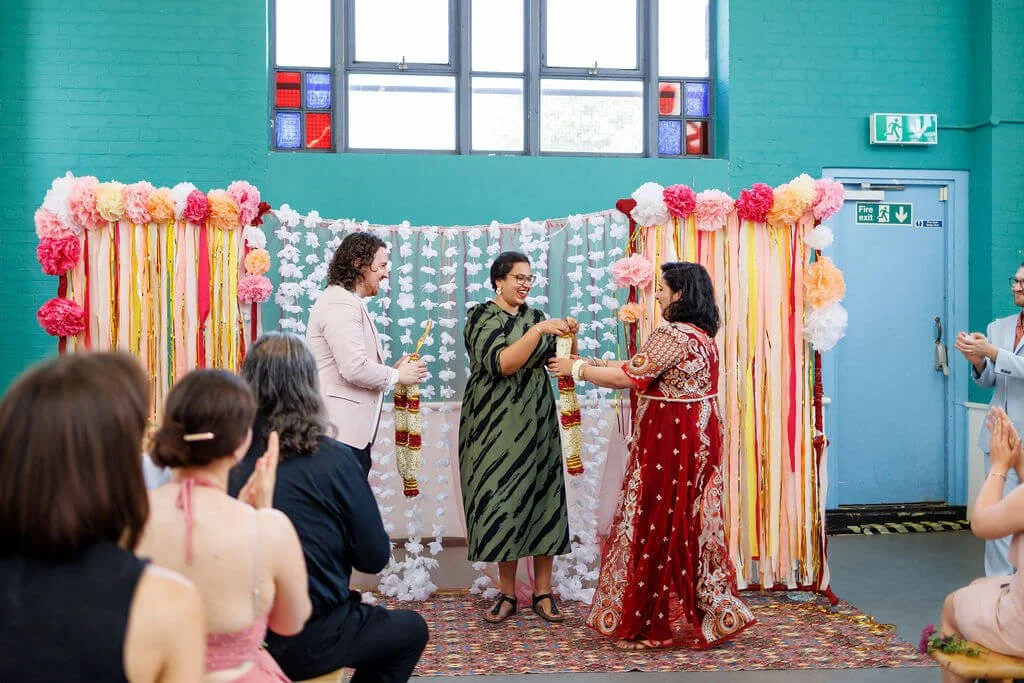
Weddings are full of symbolic meaningful moments — each one a reflection of love, commitment, and intention. Around the world different cultures came up with different ways to express those profound connotations. One such tradition is the Jaimala, also known as the garland exchange.
Rooted in South Asian wedding customs, particularly in Hindu ceremonies, the Jaimala or garland exchange is a powerful, visually striking ritual symbolising devotion, acceptance, and mutual respect. While not everyone will choose to incorporate it into their own ceremony, understanding its meaning offers a deeper appreciation of the beauty and significance behind it.
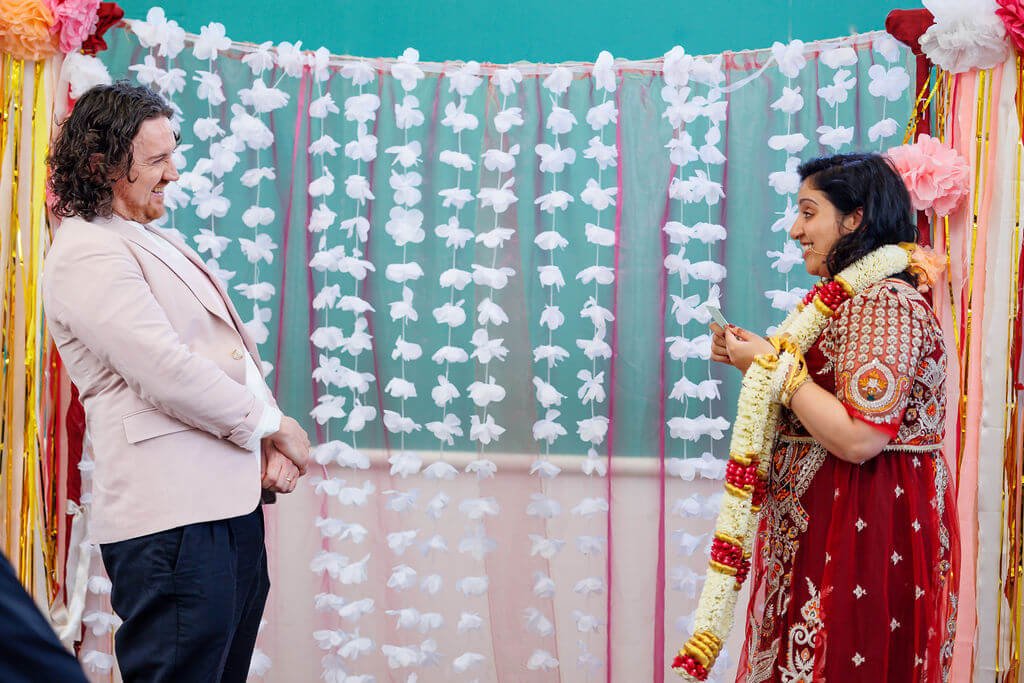
What is the Jaimala?
The Jaimala (also known as Varmala) is a ritual that typically happens during Hindu weddings, usually at the beginning of the ceremony. The term comes from Sanskrit—“jai” meaning victory and “mala” meaning garland. Together, the word can be interpreted as “garland of victory,” signifying the symbolic “winning over” of one another in love and acceptance.
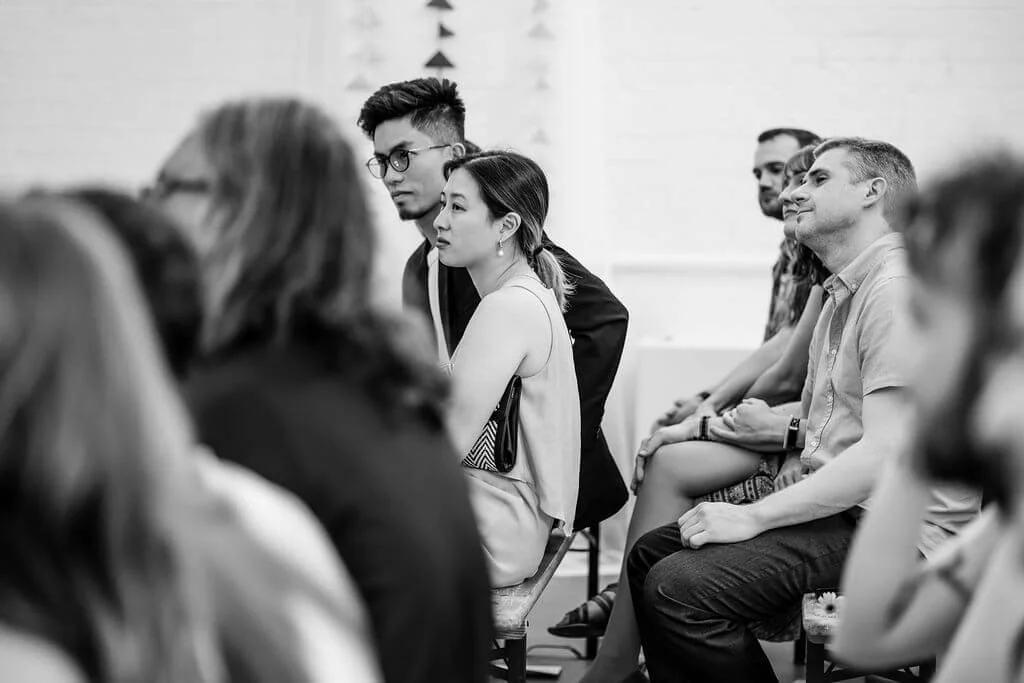
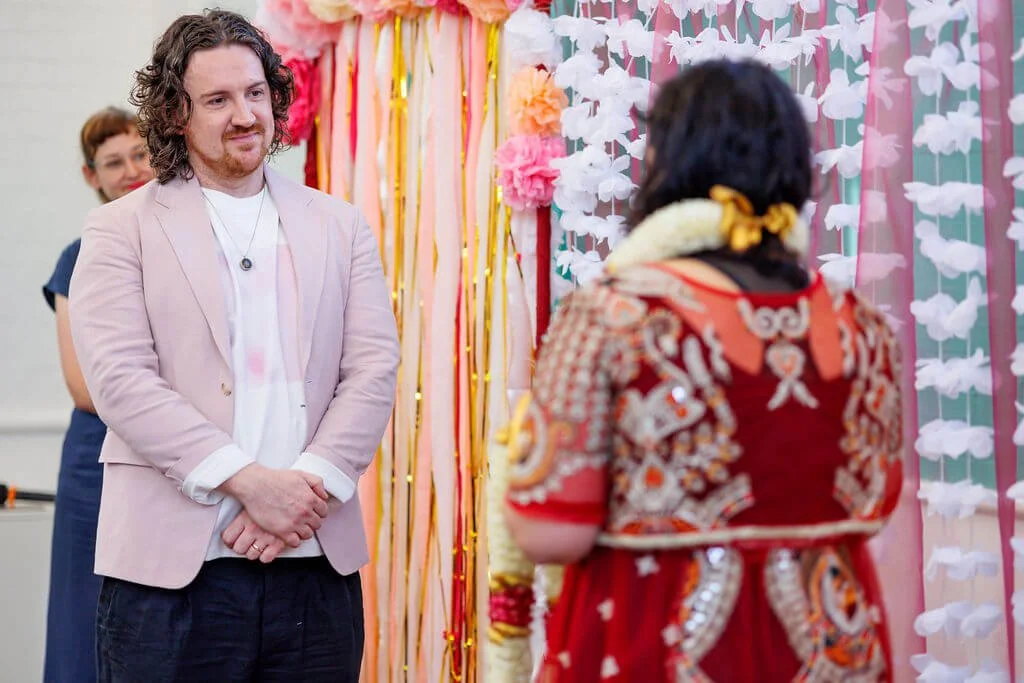
In a traditional setup, the groom arrives at the wedding venue in a celebratory procession known as the Baraat, greeted by the bride’s family and guests. After this joyful welcome, the bride and groom come face to face, on a ceremonial platform or decorated stage, for the Jaimala exchange.
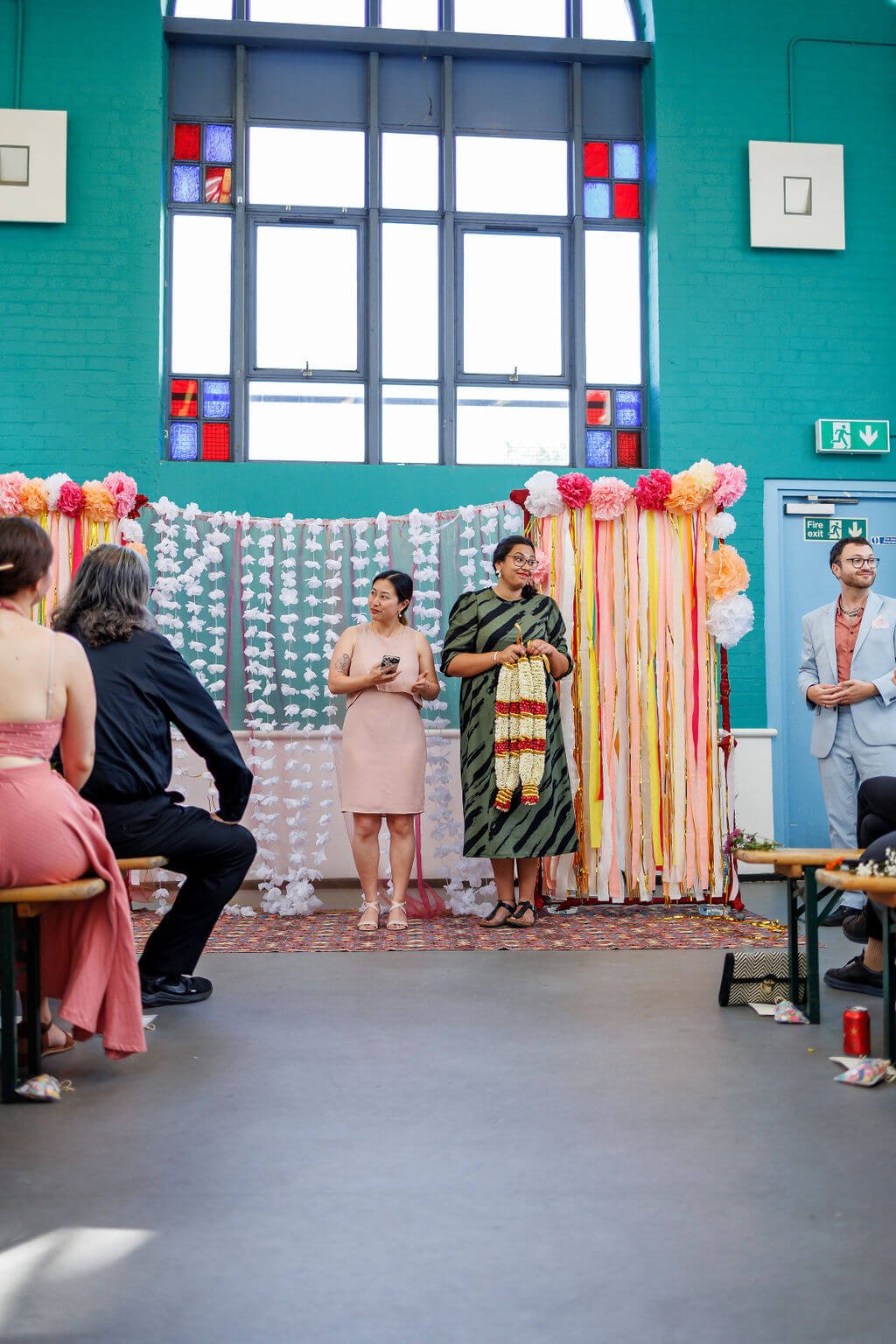
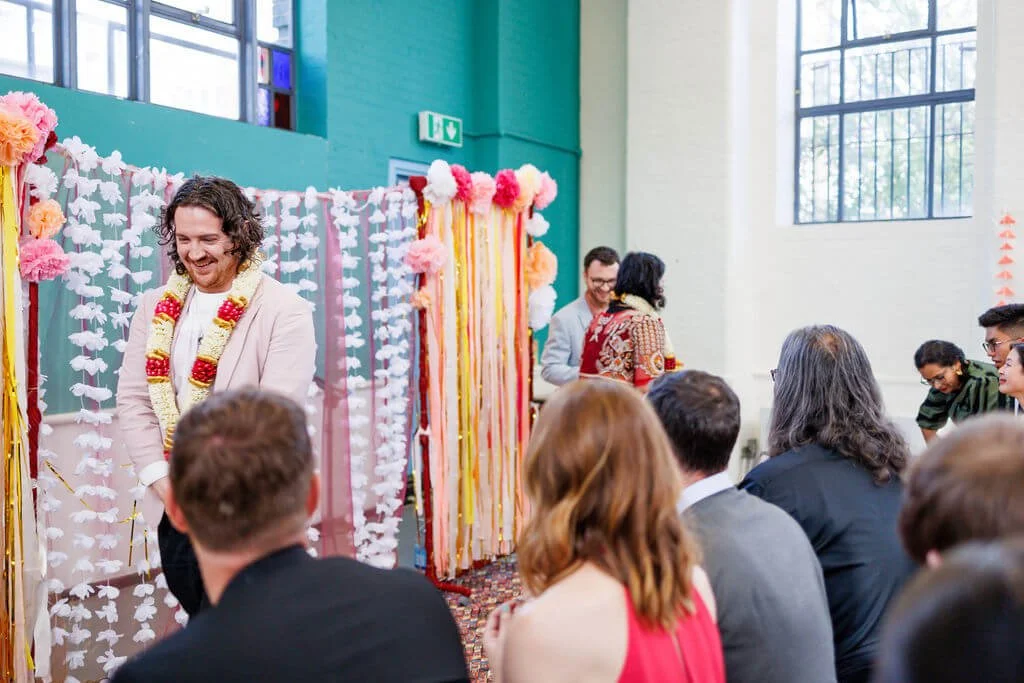
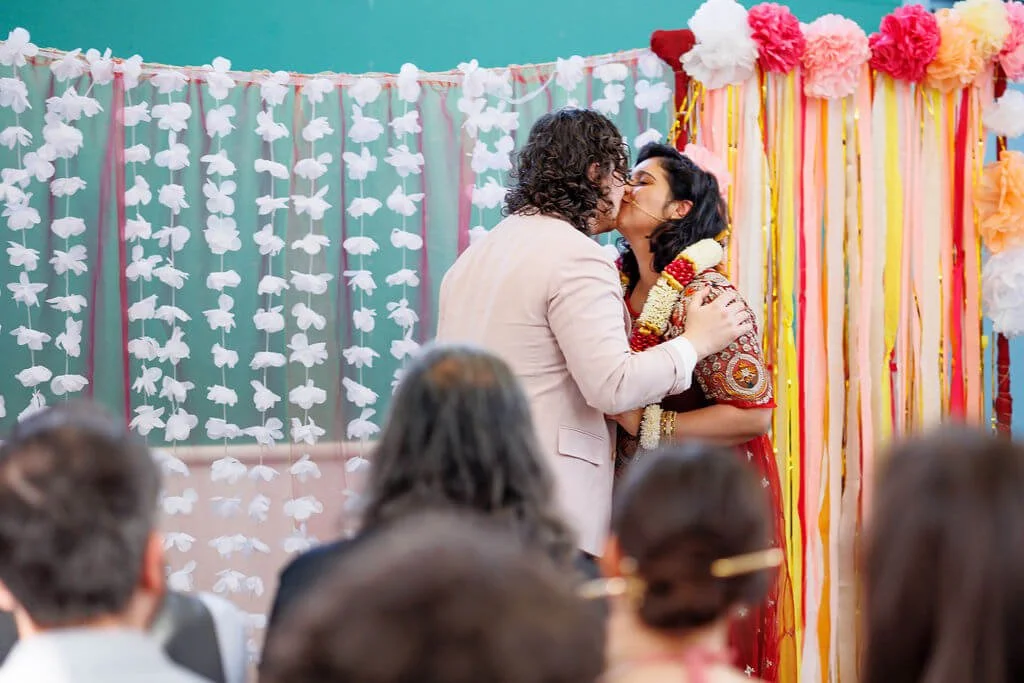
A joyful indoor wedding ceremony unfolds with three people standing at the front. They incorporate a garland exchange in a decorated area with colorful flowers and ribbons. Attendees watch and clap as sunlight pours through the large window, illuminating the teal wall.
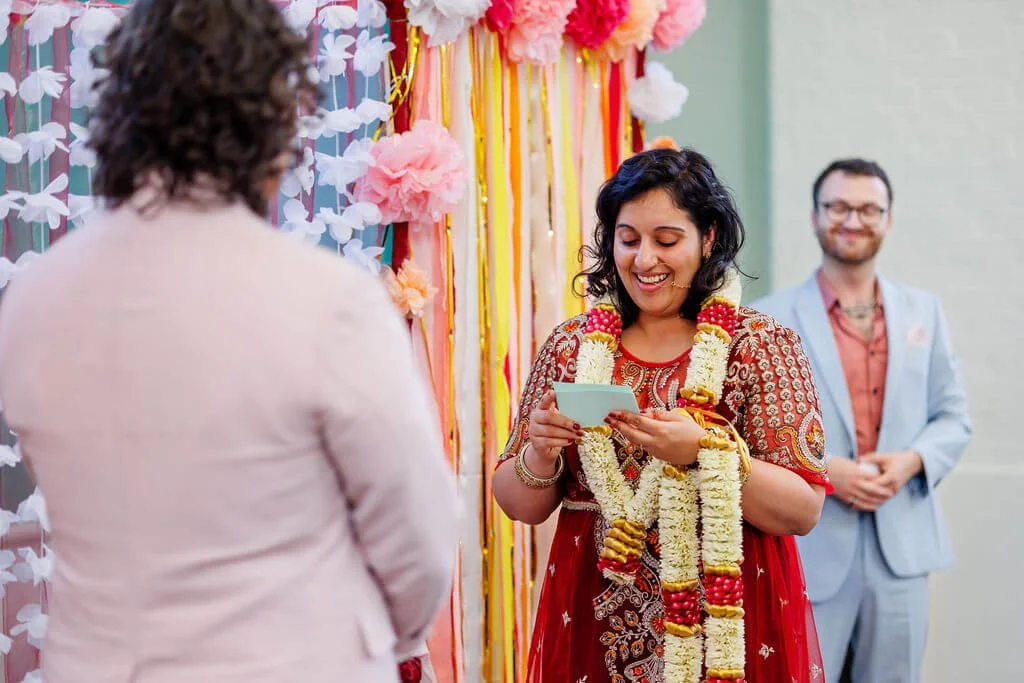
Each partner takes turns placing a floral garland around the other’s neck. This act is more than ornamental - it represents a mutual offering of love and respect, and a public acknowledgment that each is ready to accept the other as life partners. It is considered to be the couple’s first official act together during the ceremony, setting the tone for everything that follows.
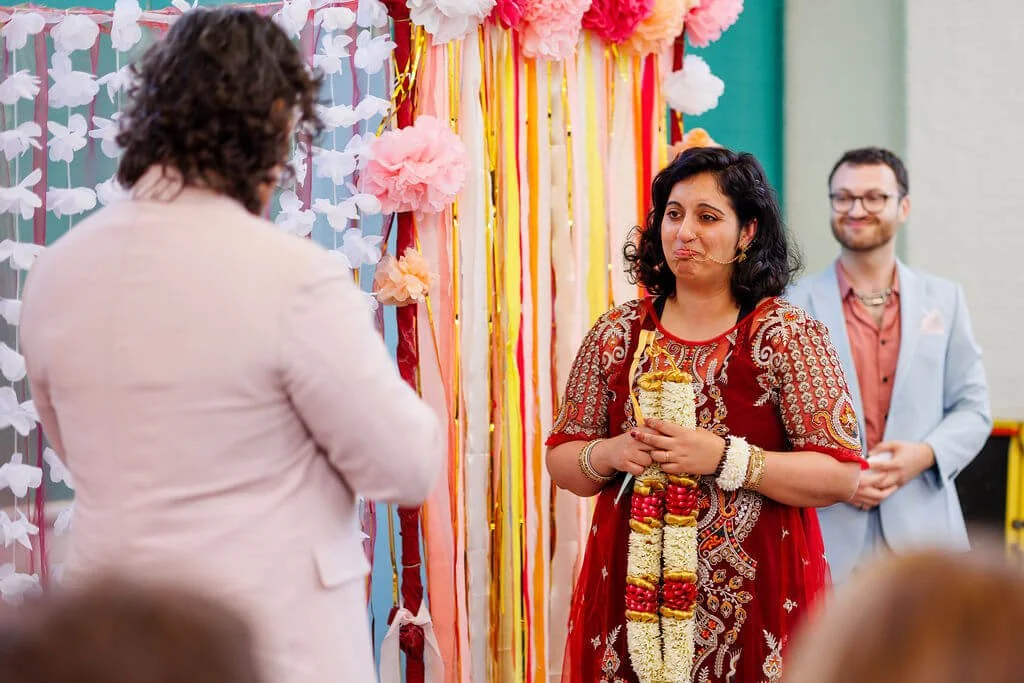
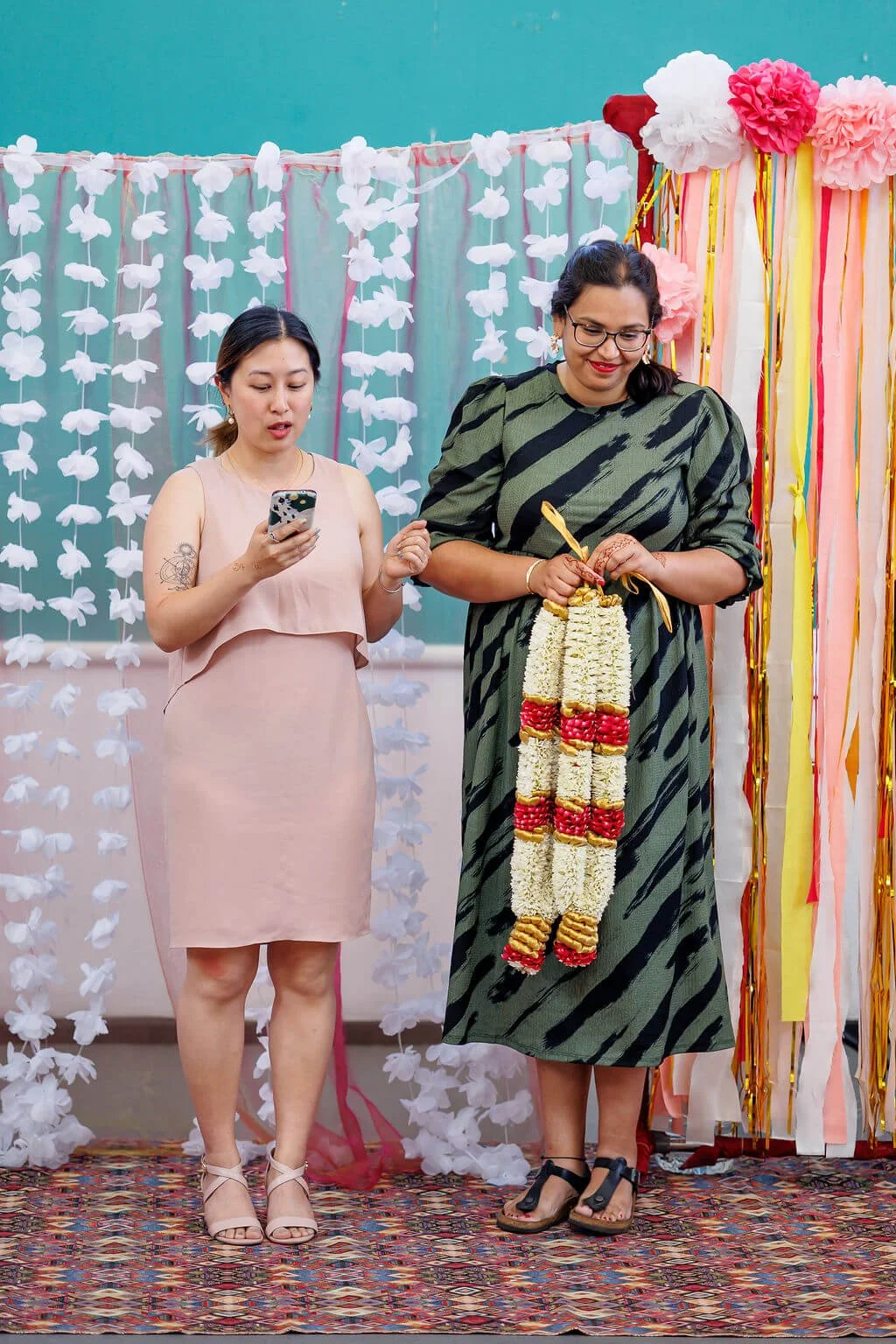
The garlands themselves are usually made of fresh flowers like roses, marigolds, jasmine, or orchids. Each flower can carry its own meaning—purity, beauty, strength, or devotion - adding deeper layers to the custom.
A Wedding Ritual Rich in Meaning
More than just a floral exchange, the Varmala is layered with symbolism—both spiritual and emotional. It’s a moment that both carries centuries of tradition is deeply personal to every couple. Beyond the beauty of the garlands and the joy of the exchange, this ritual speaks to the heart of what marriage truly represents: love, unity, and mutual honour.
Symbol of Acceptance: Exchanging garlands is a way of saying, “I choose you.” It’s about embracing one another as equals, with respect and open hearts.
Beginning of Union: The Jaimala marks the start of the wedding rituals. It’s a threshold moment—stepping into the shared space of partnership.
Cultural Celebration: The flowers, music, colours, and emotion all come together to create a celebration that is as vibrant as it is meaningful.
A Visual Storyteller’s Dream
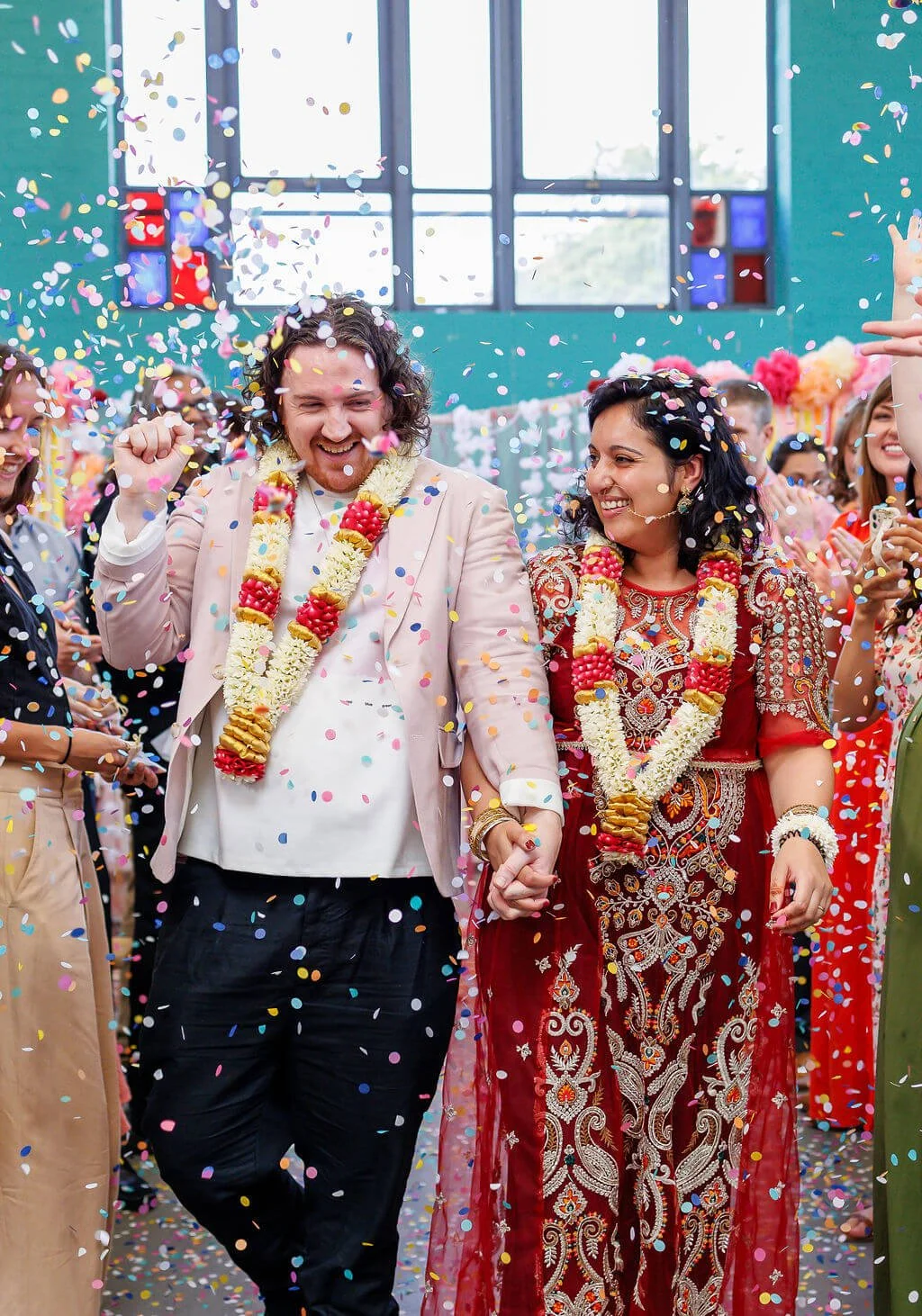
As a documentary wedding photographer, I find the Jaimala to be an incredibly expressive and dynamic part of a South Asian wedding or intercultural wedding. The laughter, the emotion, the eye contact—there’s so much story in that one element of a wedding ceremony.
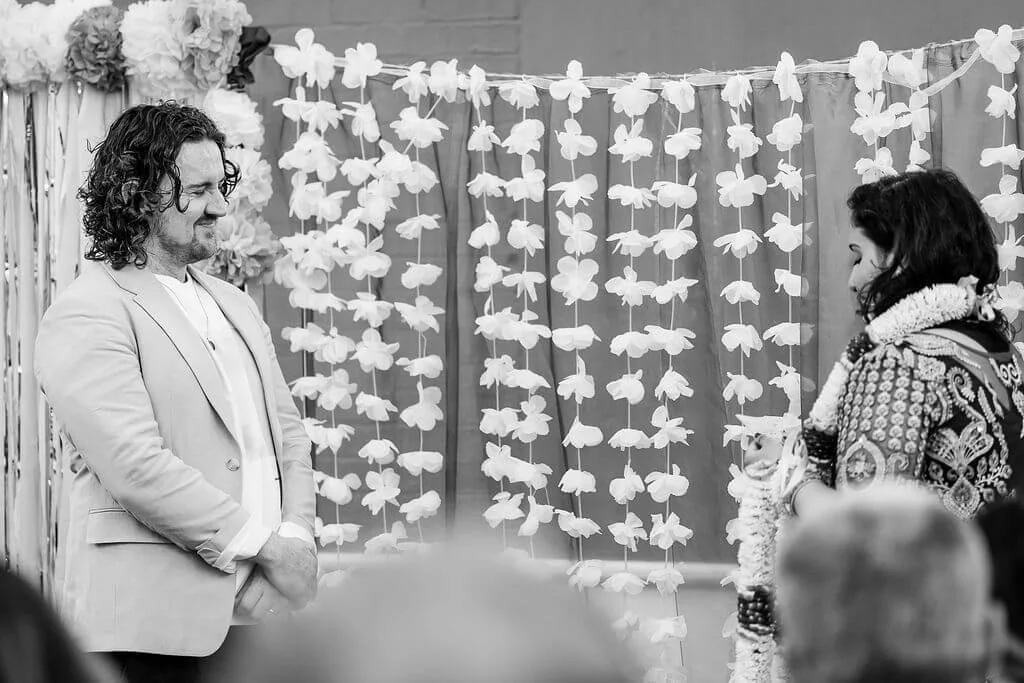
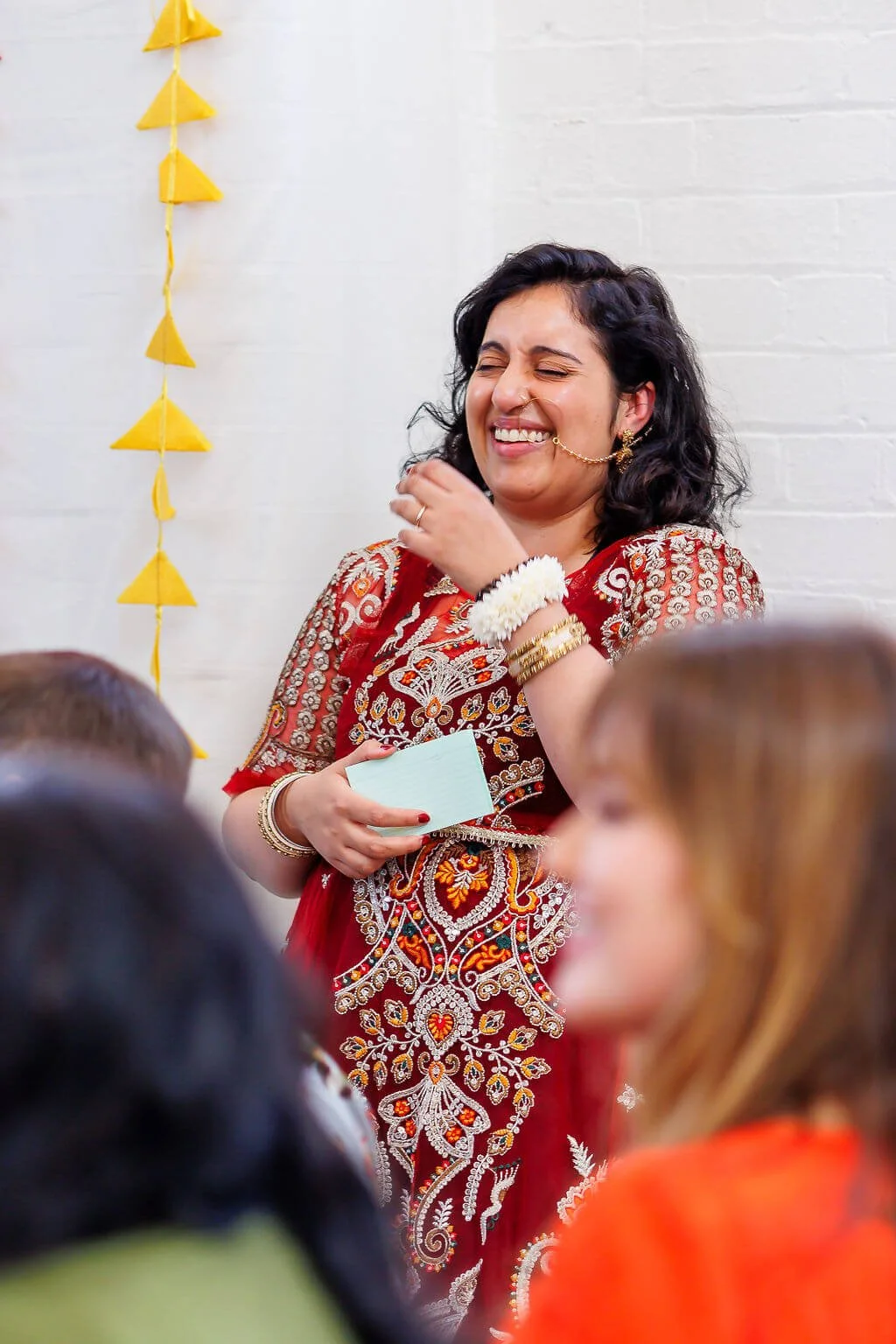
What makes this moment especially powerful is how unfiltered it is. Whether the couple is exchanging shy smiles or tearing up or bursting into laughter, it’s always raw, real, and unrehearsed. The backdrop is usually rich in colour and detail, adding texture and energy to the frame. It’s a chance to capture not just the couple’s connection, but the joy of the families and the cultural richness of the celebration.
The Jaimala doesn’t just mark the start of the ceremony—it often sets the emotional tone for the entire day. And as a photographer, those are the moments you live for.
Respecting the Roots of the Tradition
While it might be tempting to include similar rituals in your own ceremony purely for their beauty or symbolism, it’s important to approach cultural traditions like the Jaimala with respect and understanding. If this is part of your or your partner’s heritage, it can be a beautiful way to honour your culture and share it with your guests. Many intercultural couples are particularly drawn to this custom even if not following all the traditions to a “T”.
If it’s not part of your background, consider exploring symbolic rituals that are meaningful to your own story or creating something new that reflects your values—without appropriating sacred practices.
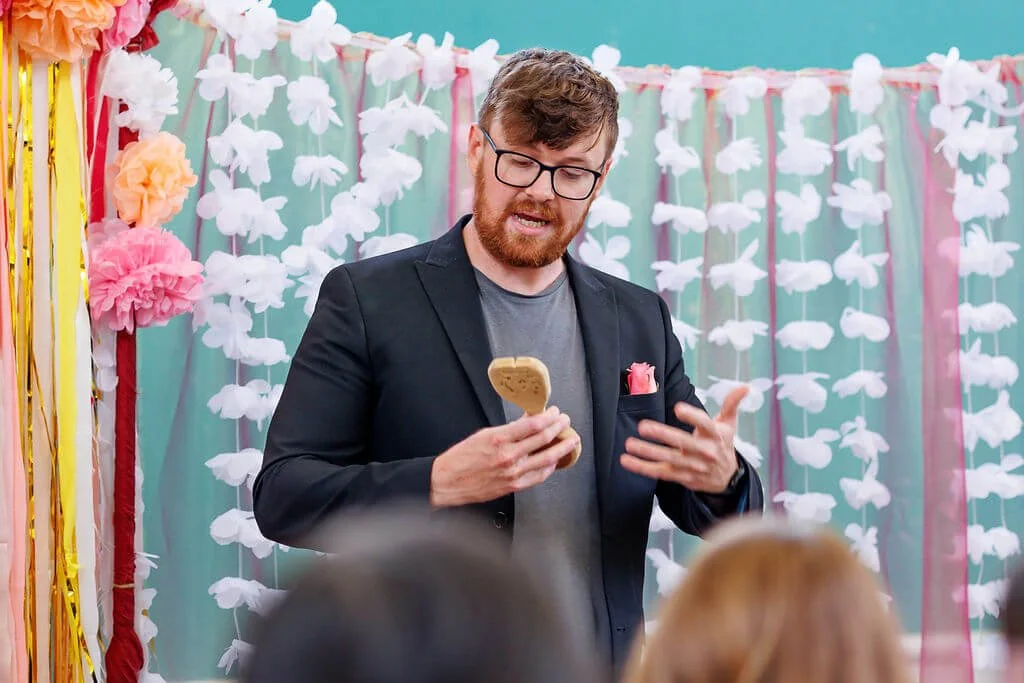
This couple, for instance, also included a Welsh tradition of gifting a carved wooden “love” spoon during their unique wedding ceremony in London, reflecting both partner’s cultural heritages.
Final Thoughts
The Jaimala or Varmala or flower garland exchange is a moment of deep connection. It reflects the heart of what a wedding ceremony is truly about: choosing one another, with love, intention, and joy. Whether you’re honouring your or your partner’s culture or learning about traditions around the world, taking time to understand the stories behind these rituals enriches your experience of love and celebration.
Here’s some more blogs for you to read on all things weddings and photography and if you want more bite-sized content make sure to follow me on Instagram and TikTok.